
When Innovation Meets Resistance: Are We Ready to Embrace a Different Future for Our Children?
- 2 days Ago
- 12 Min Read
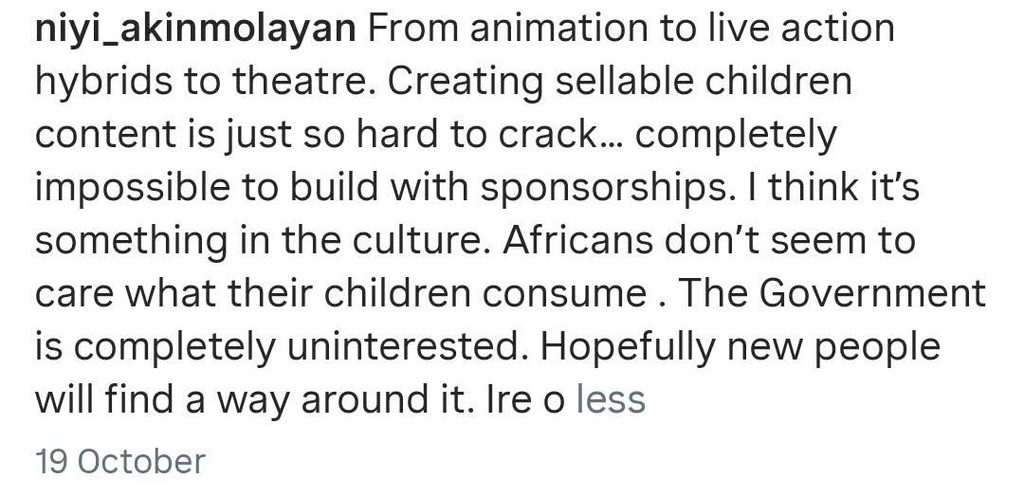
On October 19, 2026, veteran Nollywood filmmaker Niyi Akinmolayan shared a troubling experience on his Instagram page. After investing over ₦300 million in the production of children’s content, ranging from animation and live-action hybrids to theatre, he was still struggling to get the Nigerian audience to embrace and purchase his work.
Reflecting on the experience, he expressed his frustration with the apparent lack of interest in what African children consume, adding that the government seemed equally uninterested.
His post got me thinking.
Not just about the challenges of producing content for children, but also about the work we do at TCIM Initiatives, the resistance we have encountered, and a deeper question that deserves our attention: Are we truly ready to embrace ideas that challenge the way we have always done things?

When Something Different Becomes Difficult to Accept
My first encounter with Niyi Akinmolayan’s creativity was through Kajola, his science-fiction feature film released in 2010. It was not a perfect production, but it was an ambitious attempt at something different within the Nigerian film industry at the time. Rather than being celebrated solely for its ambition, the film also attracted considerable criticism.
Fast-forward to 2026, sixteen years after Kajola. Akinmolayan has gone on to produce successful projects that have generated hundreds of millions of naira. Yet, according to his account, his efforts to create content specifically for children have not received the level of acceptance he hoped for.
This raises an important question: why can we celebrate innovation in theory but struggle to embrace it when it appears before us?
Sometimes, the problem is not necessarily that an idea lacks value. It may be that the idea challenges what people have become comfortable accepting.
We are often more willing to trust what we already know than to explore what we have yet to understand. We judge new ideas against familiar standards, sometimes without considering whether those standards are still adequate for the challenges we face today.
And when this happens, innovation becomes an uphill battle.
My Experience Introducing TCIM to Schools
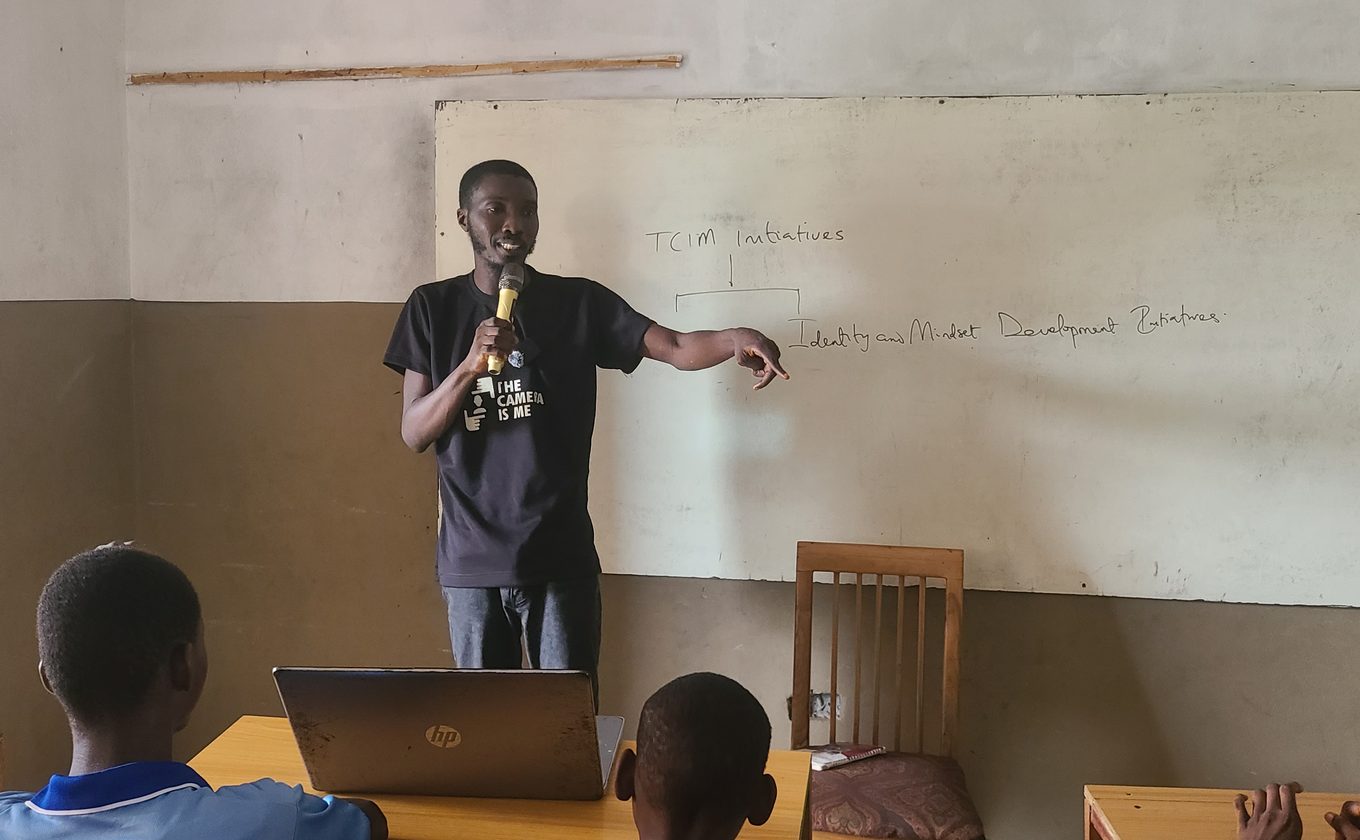
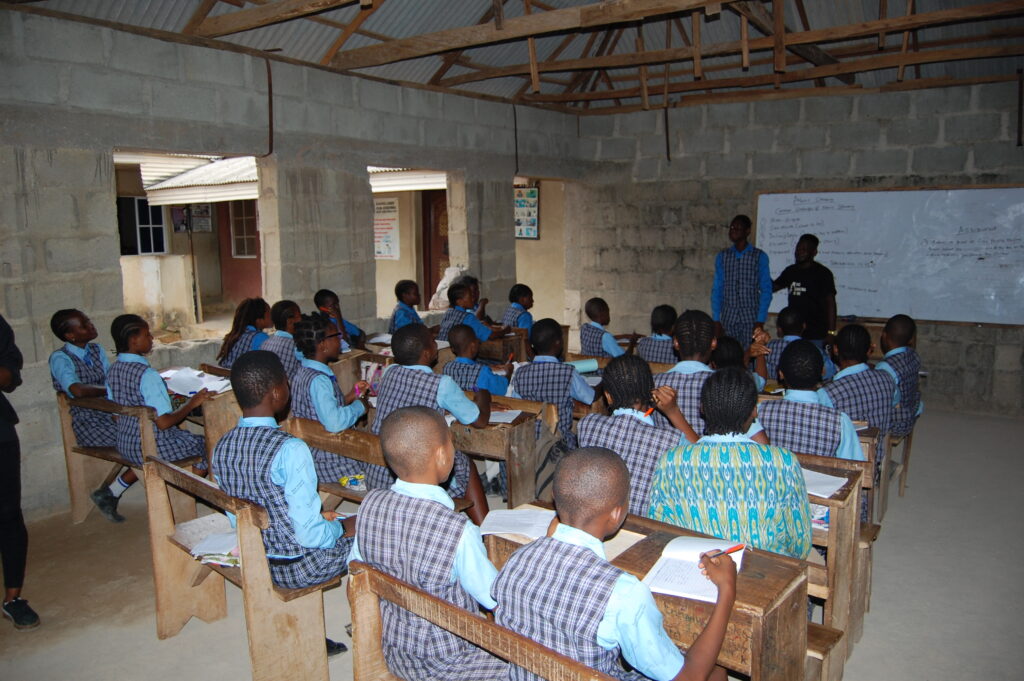
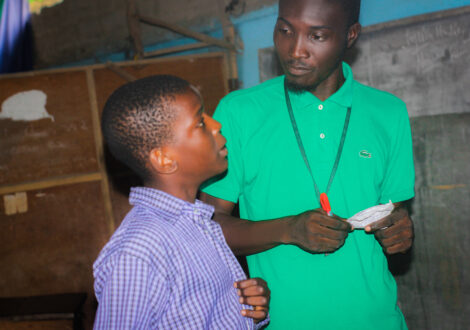
I remember when I first brought the idea of TCIM to Lagos and began visiting schools to introduce our free seminars and youth development programmes.
During one of those visits, a school proprietor said something that has remained with me.
“I know your kind of people. You want to use our children to get grants and sponsorship for your programme. You people will come in the name of an NGO for your selfish interests. What is in it for us as school owners?”
I was shocked.
At the time, I was barely surviving financially. Whatever I earned from photography and videography went into sustaining TCIM Initiatives. Our support came from a handful of family members and friends who believed in what we were trying to build.
I was not approaching schools because I had a financial advantage to gain from their students. I was there because I had become deeply committed to helping teenagers develop a healthier understanding of themselves and their potential.
Yet, I was being viewed through the lens of suspicion.
Of course, I understand that schools have responsibilities, operational costs, and legitimate reasons to scrutinise organisations seeking access to their students. Not every organisation that claims to have good intentions deserves automatic trust. Accountability and safeguarding matter.
But there is a difference between asking reasonable questions about an initiative and dismissing its potential simply because we cannot immediately see what we stand to gain from it.
Over the years, I have observed a recurring pattern. Whenever we approach schools with our free seminars or youth development opportunities, the conversation can quickly shift from what the students stand to gain to what the school itself stands to gain financially.
If an initiative does not offer an immediate financial benefit to the school, its value can become difficult to recognise.
And that is where we must begin to question our mindset.
What happens to the future of our children when we measure every opportunity for their development primarily by what it offers us in return?
When Our Familiar Standards Become Our Limitations
This challenge goes beyond school proprietors. It speaks to a broader issue in how we approach education, creativity, and development.
Our educational system must continually evolve to address the realities of each new generation. While foundational subjects remain important, teenagers today are also navigating questions of identity, self-perception, purpose, emotional intelligence, relationships, digital influence, and career direction.
These are not peripheral concerns. They shape how young people understand themselves, make decisions, respond to challenges, and participate in society.
Yet, opportunities to integrate these developmental needs meaningfully into everyday learning remain limited in many educational settings.
At TCIM Initiatives, we began asking ourselves a simple question: could we create something that helps students develop academically while also equipping them with a healthier mindset?
That question informed our approach to developing our English Comprehension and Summary Workbook.
We did not want to create just another comprehension textbook that performed the same function as every other book on the shelf. We wanted a resource that could meet established English language learning objectives while introducing teenagers to meaningful personal development themes.
The workbook was designed to help students practise reading comprehension, summary writing, grammar, vocabulary, articulation, and critical thinking while engaging with topics such as identity, purpose, confidence, resilience, discipline, and personal responsibility.
In other words, we wanted students to learn English while also having opportunities to think more deeply about themselves and the stories they tell themselves about who they are and who they can become.
This approach reflects the heart of TCIM Initiatives: building a better society through a healthy mindset.
Our belief is that education should do more than help young people pass examinations. It should also create opportunities for them to develop the understanding, skills, and confidence needed to navigate life.
Interestingly, we have received testimonies from students who have used our workbook and reported improvements in their confidence. Some have also shared how engaging with its contents helped them think more clearly about possible career paths.
These experiences reinforce why we believe that academic learning and personal development do not have to compete with each other. They can complement one another.
When the New Is Judged by the Standards of the Old
Despite our intentions, introducing this approach has not always been straightforward.
I recall an argument I had with a teacher from one of the schools using our workbook. She questioned why the book did not look like the conventional textbooks she was accustomed to. She also felt that the topics were too inspirational and therefore unusual for a comprehension textbook.
Her expectation was understandable in one sense: she had a familiar idea of what an English comprehension textbook should look like.
But it also revealed a challenge that innovators frequently encounter. When something departs from what we recognise, our first reaction may be to question its legitimacy rather than examine its potential.
The question becomes, “Why doesn’t this look like what we already know?” instead of, “Does this achieve its intended purpose, and what additional value could it offer?”
There is an important distinction between maintaining standards and refusing to reconsider them.
Standards help us preserve quality, consistency, and effectiveness. But when familiarity becomes the only measure of quality, we risk rejecting ideas that could improve the very systems we are trying to protect.
Innovation does not mean abandoning everything that has worked before. It means being willing to examine what exists, identify what is missing, and explore better ways of meeting our needs.
We cannot keep expecting different outcomes from young people while refusing to reconsider the approaches through which we educate and develop them.
What Are We Teaching Our Children About Value?
The challenge also appears in the way we approach learning materials.
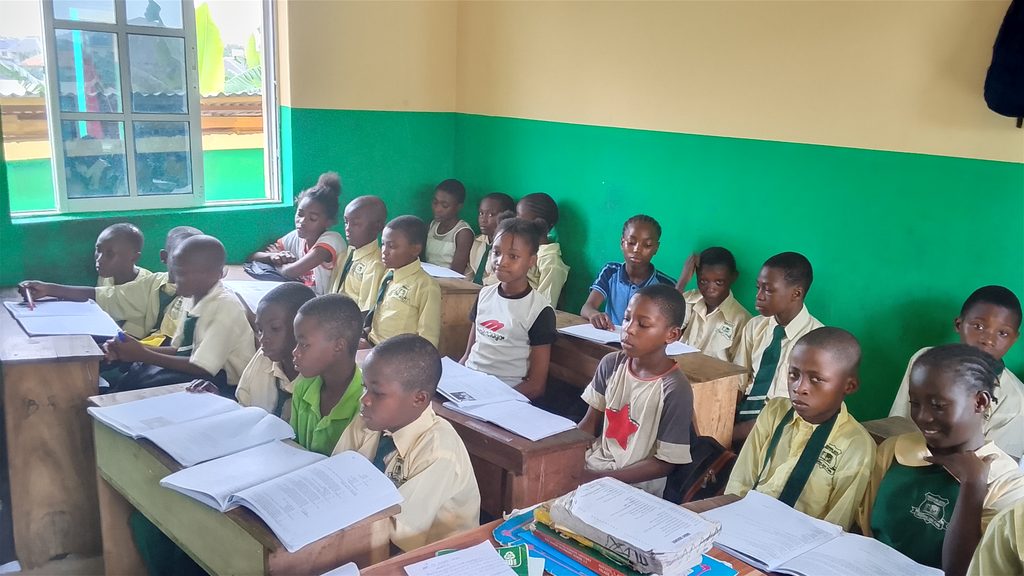
I have encountered situations in which parents are reluctant to purchase additional learning resources beyond the main English Language and Mathematics textbooks. This raises questions about how we prioritise learning and whether we sufficiently recognise the value of resources that support other dimensions of a child’s development.
I also remember a student who told me she would not be attending one of our free classes because her mother had instructed her not to participate, explaining that she was already providing something similar at home.
There may have been reasons behind that decision that I did not fully understand. Parents have the right to make decisions about their children’s participation in programmes.
Nevertheless, the experience made me reflect on something important: how often do we dismiss an opportunity because we assume it offers nothing beyond what we already have?
A free programme may provide a different learning environment, expose a teenager to new perspectives, or create opportunities to interact with people and ideas outside their immediate surroundings.
A new textbook may introduce a different way of thinking. A locally developed children’s animation may tell stories that help young viewers see themselves and their society differently.
These possibilities deserve consideration before we decide that something new has little to offer.
And this is especially important when the intended beneficiaries are children.
The Mindset Behind the Resistance
At TCIM Initiatives, we are interested in more than the outward behaviour of teenagers. We also pay attention to the beliefs, experiences, and internal narratives that influence how they see themselves and respond to the world around them.
The same principle can help us examine our collective attitudes towards innovation.
What do we believe about the things we create in Africa?
Do we instinctively consider locally developed ideas inferior to those produced elsewhere? Do we assume that something is not valuable because it does not resemble what we have always known? Do we give unfamiliar ideas a fair opportunity to demonstrate their usefulness?
These questions are worth asking because our mindset influences what we support, what we reject, and what we allow to grow.
This is not an argument that every new idea is good, every locally produced resource deserves acceptance, or every criticism of innovation is misplaced. Good intentions alone do not guarantee quality. New ideas must be tested, evaluated, and improved.
But fair evaluation requires an open mind.
We must learn to distinguish between an idea that has failed to demonstrate its value and one that we have refused to give a fair chance.
We must also recognise that innovation often requires patience. The fact that something is unfamiliar today does not automatically mean it lacks a place in tomorrow’s society.
A society that wants to progress must be willing to question its assumptions, examine its habits, and make room for better possibilities.
Our Children Deserve More Than What We Already Know
The conversation surrounding children’s content, educational resources, and youth development ultimately leads us to a bigger responsibility.
What kind of society are we building for the next generation?
Our children are growing up in a world that is changing rapidly. Their challenges are not identical to those faced by previous generations, and the solutions available to them should not be limited to the approaches their parents and grandparents knew.
They need quality education, but they also need opportunities to understand themselves, develop their abilities, explore their interests, and build the confidence to make meaningful decisions.
They need stories that reflect their realities, learning materials that expand their thinking, and environments that encourage them to question, create, and discover.
They also need adults who are willing to listen, learn, and adapt.
This is why the work of organisations like TCIM Initiatives matters to us. Our commitment is not simply to organise seminars, publish workbooks, or conduct school visits. It is to contribute to the development of young people who can understand their identities, take responsibility for their choices, and become active participants in building a better society.
But no organisation can do this work alone.
Parents, educators, school proprietors, filmmakers, policymakers, businesses, and communities all have a role to play. We must create an environment where worthwhile ideas can be examined fairly, where children’s development is treated as a genuine priority, and where innovation is not dismissed merely because it is unfamiliar.
The future of our children should not be determined solely by what we are comfortable accepting today.
It should also be shaped by what we are willing to learn, improve, and become.
After all, the leaders of tomorrow are the children of today. The stories they consume, the education they receive, the opportunities they encounter, and the beliefs they develop will influence the kind of society they eventually build.
If we fail to pay sufficient attention to their development, we risk losing opportunities to nurture their potential, strengthen their identities, and preserve the stories that make our society unique.
At TCIM Initiatives, we believe that building a better society begins with developing a healthier mindset. That means not only helping teenagers rewrite the stories they tell themselves, but also challenging ourselves as adults to reconsider the stories we have accepted about education, creativity, and progress.
Perhaps the question is not whether our children are ready for a different future. Perhaps the question is whether we, as the adults responsible for shaping that future, are ready to embrace one.

About the author
Joseph Adeleke is the founder of TCIM Initiatives, an organisation focused on teenage identity, mindset development, and youth development through its Narrative Identity Transformation Model. Read more about Joseph
- 2 weeks Ago
- 8 Min Read